











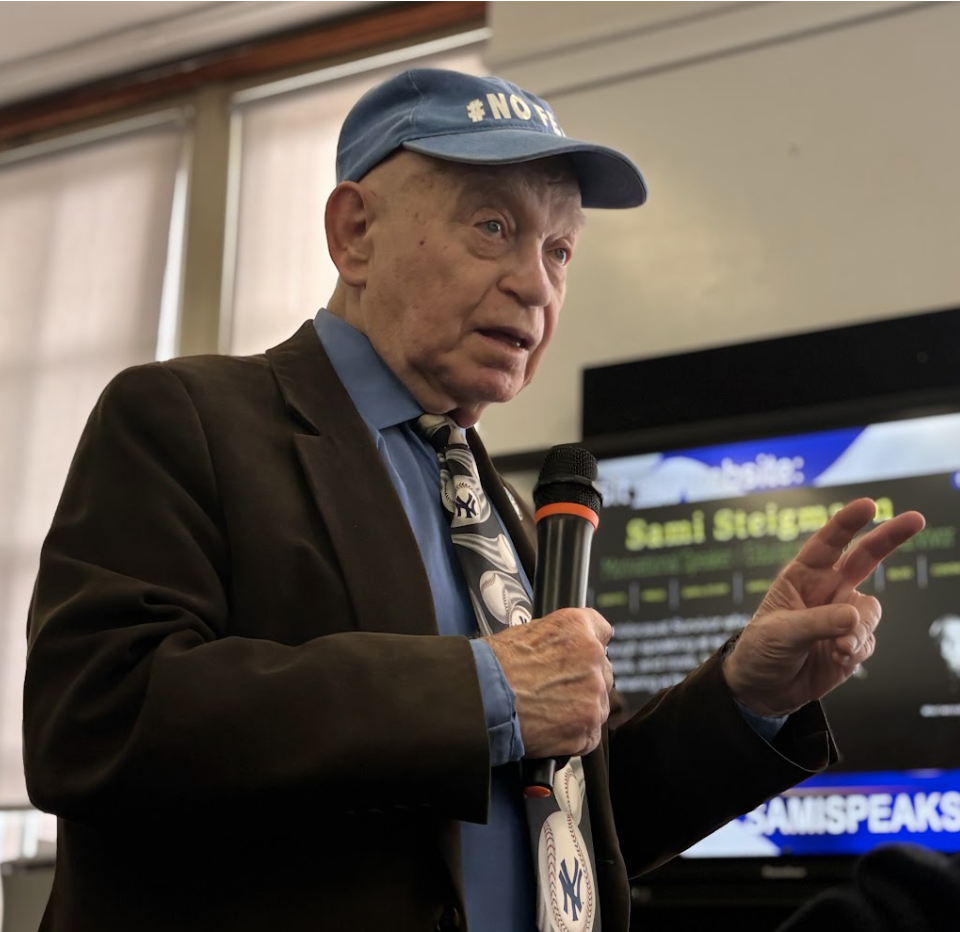
On Feb. 10, Sami Steigmann, a Holocaust survivor, spoke with eighth and eleventh grade students about the history surrounding the Holocaust and his life experiences. Steigmann was just one and a half years old when he and his family were forced to move to a labor camp in Ukraine. He said that since he was too young to work, he became a victim of medical experiments done by the Nazis on children. This was unknown to him until years later, though he attributes chronic pain he suffers with to this day to the medical experiments.
To many students, Steigmann served as a firsthand account, reinforcing the importance of remembrance and education. Sydney Gerber, an eighth grader, thought it was an “incredible experience.”
“We need to ensure that the horrors and trauma from this time, that many Jewish people and marginalized groups went through, are never forgotten,” Gerber said.
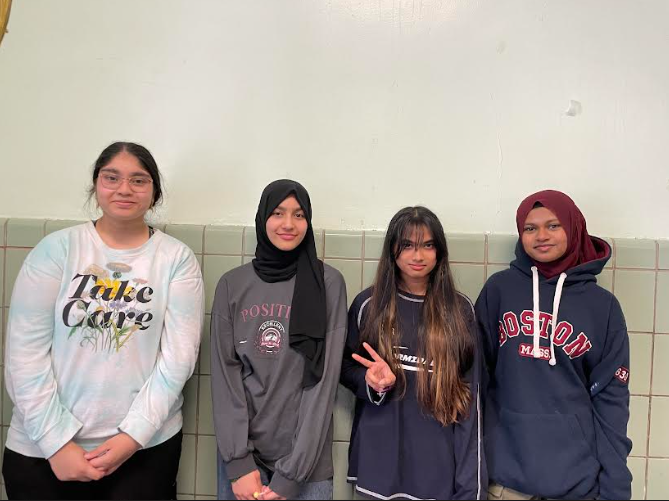
Junior Razia Quddus agreed that having a Holocaust survivor speak to students was impactful.
“I think that him sharing his story is really good for us to learn about how there’s living proof of what happened,” said Quddus. “It’s really important that we don’t repeat these patterns again.”
Global teacher Adam Bleecker enjoyed the talk overall and described Steigman as “a very likable man who was passionate about the topic,” but was disappointed by a response to a question he asked about how the formation of Israel impacted Holocaust survivors.
“He didn’t answer the question and I was disturbed by some of his comments,” said Bleecker. “He characterized Muslims as stereotypes and I don’t believe that all people in a group should be characterized the same way, especially when it’s in a negative light.”
Quddus was also confused by Steigmann’s response.
“I feel like that was a really straight forward question but he didn’t answer it and he just started talking about Muslim countries,” she said.
Steigmann began his talk by making clear that he was just presenting his own perspectives with no intention to force his beliefs onto others, but certain remarks he made were seen as controversial by students and staff members, causing some to decline to comment for this story.
“He said Palestine was warned before all of the bombings,” said Quddus. “But to me personally, I feel like how can you warn people to get off their own land for you to bomb them.”
Gerber, who describes himself as a “Holocaust [awareness] advocate,” and many other students and staff weren’t sure that Steigman should have brought up the Israel-Palestine conflict.
“To me it was like he didn’t want us to have our own perspective and our own thoughts,” said Saif Osman, an eighth grader. “He was being really, really biased and just tried to change what we think about different things.”
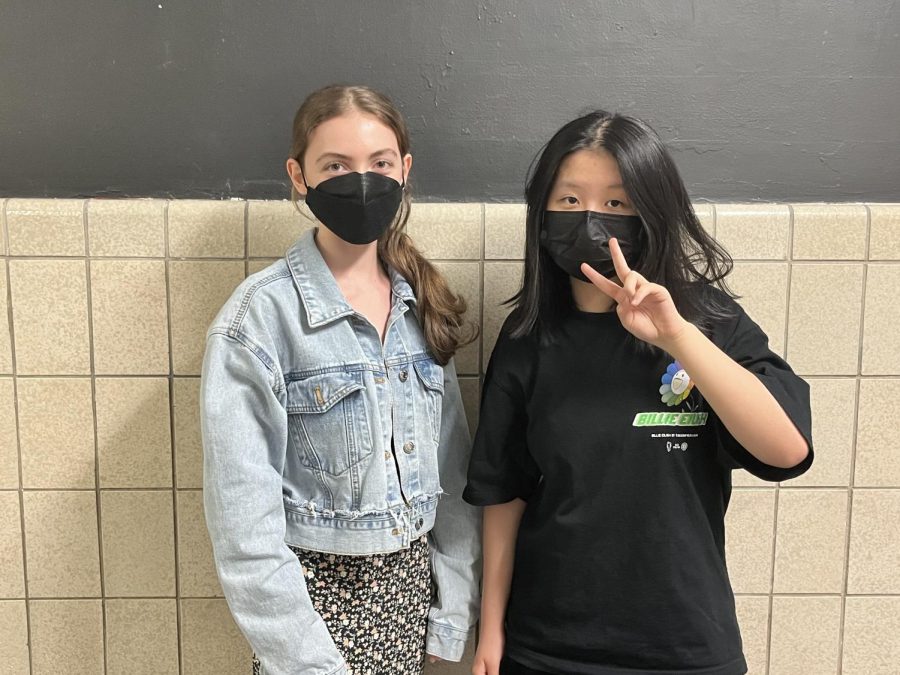
Some students also pointed out how Steigmann was assuming people’s nationalities and going up to them asking questions unrelated to the topics discussed.
“He was like, are you Chinese? And I said, no, I’m Filipino,” said Chloe Casem, an eighth grader, “And he was like, oh, the Philippines, they helped the Jewish community. And I was like, yeah, that’s great. And then he kept asking if I was Chinese after that,” she said.
And some students felt like many of the questions were left unanswered.
“I wish he actually would have answered the questions,” said Bubbles Alemany, an eighth grader. “He was very vague with his answers. Whenever we would ask him questions he would reply with ‘I don’t know’…He never explained any of that.”
While some students wanted more out of the questions they asked, Regalado didn’t see it as an issue and emphasized that it shouldn’t “minimize what he went through.”
“I think he was one-and-a-half. He even said it himself. He was like, ‘I don’t have a lot of memories from being there because I was one year old,’” said Regalado.
Steigman told students that during his lifetime he briefly worked in the Israeli Airforce, pursued acting and has spoken before the United Nations, most recently speaking about the genocide of Muslims in China and Hindus in Bangladesh. He shared about how every experience in life has led him to where he is today and said that his message is “to stop the spread of hate in the world.”
“You are my hope; you are the future that will make this a better world,” said Steigmann.

isabella wang • Mar 31, 2026 at 11:17 AM
I loved that he shared his story and how the things he did in life influenced what he does now! But why did he even leave the questions unanswered and questioned the girl for if shes Chinese which was weird kind of.